Molecular characterisation of Cysticercus tenuicollis (Taenia hydatigena cysts) in goats in Ibadan, Nigeria
DOI:
https://doi.org/10.51607/22331360.2026.75.1.39Keywords:
Cysticercus tenuicollis, Taenia hydatigena, molecular characterisation, phylogeneticsAbstract
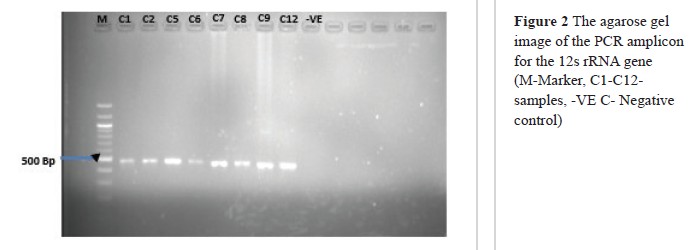
Cysticercus tenuicollis, the larval stage of Taenia hydatigena, is a common cause of cysticercosis associated with economic losses in small ruminants. Despite its wide distribution, molecular data on Nigerian T. hydatigena, particularly from Cysticercus tenuicollis, remain limited. This study aimed to molecularly characterize T. hydatigena from C. tenuicollis isolates recovered from goats slaughtered in southwestern Nigeria using mitochondrial gene markers. C. tenuicollis cysts were collected from slaughtered goats and subjected to DNA extraction followed by polymerase chain reaction (PCR) amplification of partial mitochondrial cytochrome c oxidase subunit 1 (COX1) and 12S ribosomal RNA (12S rRNA) genes. All samples yielded successful amplification for both genes. Sequence analysis confirmed all isolates as T. hydatigena, showing high nucleotide similarity with reference sequences from GenBank (98.2–99.1% for COX1 and 97.3–98.9% for 12S rRNA). Nucleotide diversity was low across isolates for both markers, indicating limited intraspecific variation. Phylogenetic analysis using the Neighbor-Joining method revealed that Nigerian isolates clustered within the global T. hydatigena clade and were closely related to isolates from Europe, Asia, and North Africa. No distinct regional lineage was observed. Minor differences in tree topology between COX1- and 12S rRNA-based phylogenies were consistent with marker-specific evolutionary characteristics. Overall, this study confirms the identity and phylogenetic placement of T. hydatigena infecting goats in southwestern Nigeria, revealing close genetic similarity to global isolates. The mitochondrial sequences support dog–livestock transmission, provide a reference for future taeniid epidemiological studies, and establish baseline genetic data to inform evidence-based control strategies.
References
Downloads
Published
Issue
Section
License
Copyright (c) 2026 Akinkunmi O. Idowu, Olamilekan Gabriel Banwo, Olalekan T. Jeremiah, Olusegun A. Fagbohun, Michael I. Takeet

This work is licensed under a Creative Commons Attribution 4.0 International License.