Climate change and death investigation: Redefining experimental forensic science
DOI:
https://doi.org/10.51607/22331360.2025.74.S2.11Ključne riječi:
Climate change, death, experimental, forensic, postmortemSažetak
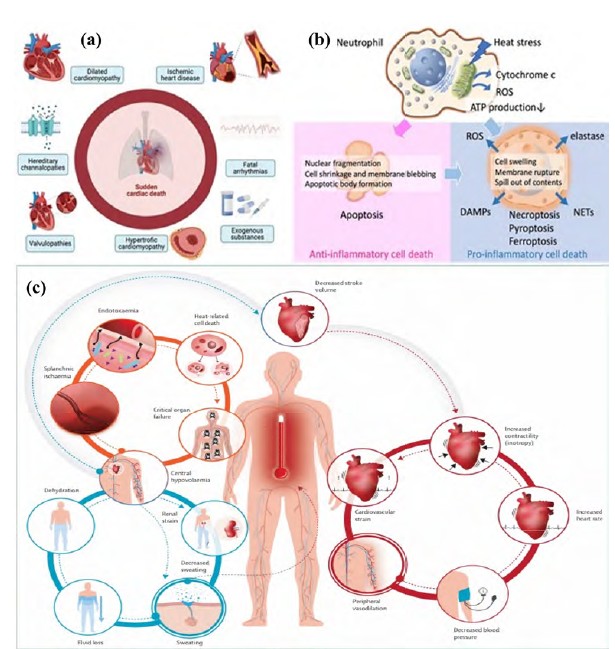
One of the deadliest weather-related occurrences in the world
is heat, and as climate change continues, heat-related mortality
could rise sharply. According to The Lancet Countdown on
Health and Climate Change’s 2020 report, an additional 475
million heatwave incidents occurred worldwide in 2019,
exposing vulnerable populations, which resulted in excess
mortality and morbidity. The number of deaths from heatrelated
causes among those over 65 has increased by 53.7%
during the previous 20 years, with a total of 296,000 deaths
in 2018. The burden of heat-related mortality linked to recent
decades of human-induced climate change was the subject of
another multinational investigation. Human health has already
been impacted by climate change and will continue to be so
through direct, indirect, and diffuse pathways. Heat-related
risks may get worse or get better as a result of interactions
between climate change and other trends including urbanization,
population growth and aging, and socioeconomic development.
High uncertainty among heat-related mortality predictors (such
as human behaviour and adaptation) are frequently the cause
of such large variations in heat mortality; in contrast, smaller
estimations of adverse health effects are produced by slower
future population increase and greater adaptability.
Reference
Preuzimanja
Objavljeno
Broj časopisa
Rubrika
Licenca
Autorska prava (c) 2025 Emina Dervišević, Hajrudin Spahović, Amina Zorlak-Čavčić, Temima Ajanović

Ovo djelo je licencirano pod licencom Creative Commons Attribution 4.0 Međunarodna licenca.